



4 Simple Mealtime Rules You and Your Kids Can Embrace

Mealtimes are a vital part of the rhythm of family life! “Research suggests that having dinner together as a family at least four times a week has positive effects on child development. Family dinners have been linked to a lower risk of obesity, substance abuse, eating disorders, and an increased chance of graduating from high school.”
And knowing families as we do, we’re guessing that the more enjoyable and connective those meals are, the better the impact. I love that God calls us to share meals as a way of connecting! Jesus even promises that if anyone hears His voice and opens the door, He will come in and eat with that person, and they with Him.
But over the decades we’ve worked with parents, many have asked for help with the chaos and conflict that can so easily dominate family meals. Thanks to my years working at a pediatric therapy clinic, I had extensive training in helping children who struggled to eat a good variety of food. Between that and my coaching of parents (and supporting our own kids), I’ve developed a free PDF for you of four simple mealtime rules for calmer, more connected meals. You can print, discuss with your kids, and modify for your unique family.
Rules for Peaceful Mealtimes
Check out this free PDF, “Rules for Peaceful Mealtimes” and post it somewhere your whole family can see it during meals.
Mealtime Rule #1: Parents serve healthy food.
The parent’s job is to prepare generally healthy food for the kids and even involve them in preparing it. It’s important to include at least one “safe” food in the meal that you know your kids will eat, but also persevere at offering a variety of healthy food. Kids often require many repetitions before they accept and then enjoy a new food.
Mealtime Rule #2: Kids decide what they eat.
While parents are responsible for what is served, children are responsible for what they eat. Let kids choose what and even if to eat. Regulating what your kids eat is the quickest way to end up with power struggles and even a decreased variety of foods eaten. “Research has shown that over time, given autonomy, young children tend to eat a variety of food and achieve a nutritionally adequate diet.”
For more help with chaotic family meals, especially if you have a very “selective eater,” see our ebook, Picky Picky! My Child Won’t Eat Anything But Junk Food. (Note, some kids’ food aversions are very intense and linked to other nervous system issues. Consult your pediatrician for extreme cases.)
Mealtime Rule #3: Respect the cook.
Have fun teaching kids the difference between respectful feedback and disrespectful complaining. You can do this by roleplaying examples of respectful and disrespectful comments ahead of time. School-aged kids might have fun rating your examples on a 1-10 scale:
- 1 = a Rude ‘Tude (attitude)
- 10 = Clear ‘n’ Kind
Ham it up a little at first. It’s best to do it on a night when you’re serving a family favorite so that the interaction is light-hearted and purely hypothetical. (“YUK! This macaroni is GROSS! It smells like… (gag) CHEESE!”)
You can wrap up the shenanigans with a more thoughtful demonstration and discussion about respectful honesty and what you’ve learned about that over the years.
Then the next time a child complains harshly at a meal, “This is yucky! I HATE this!” or makes faces or disgusted noises, you can calmly, respectfully remind them, “No problem! You can eat or not eat whatever you want! But remember – it’s important to respect the person that worked hard to fix our meal. What would be a clear but kind way to share your thoughts?” If they get stuck, you could suggest the rephrase, for example, “I don’t enjoy this food. I might like it better if….”
One mom stated, “We often analyze food and what we’d do differently in a recipe next time. I don’t always agree with their analysis, but since they’re usually a part of the cooking, they get to have an opinion.”
That’s a great way to build respect for the cook to help with meal preparation! And bonus – research shows that children eat more food when they prepare it themselves.
Want to learn more?
Check out our podcast on this topic! On Episode 130 of the Connected Families podcast, Stacy Bellward has a conversation with author and speaker Christine Jax, MS, RDN, LDN, “Healthy Mealtimes with Children Who Are Picky.”
Mealtime Rule #4: Respect others at the table.
Have a child-friendly discussion about what it means in your home to be respectful at mealtime and why it’s important. The answers (and specific rules you develop) will vary significantly based on how each person feels respected. With our lively crew, our “respect others” rules included:
- “Ask to be excused to clear your dishes.” (no random escaping)
- “Sit flat.” (to save our rickety chairs)
- “No toys at the table.” (so you can focus on the task at hand)
- “No pounding and no singing at the table.” (to avoid driving siblings crazy!)
These rules were developed together through a discussion about how to have the best mealtimes together and were posted near our table for years. (I wish I still had it, haha.)
Implementing the Mealtime Rules:
- Establish a simple strategy for disruptive behavior. For example, “You can relax on the couch for a minute or two until you are settled enough to join us again.” Explain that this a help, not a rejection, “The dinner table can get really lively and even overwhelming. Sometimes if we’re having a hard time, it helps to just rest in a quiet spot.” (Maybe even model it yourself when your voice is elevating.) Welcome a child warmly back from this break, even offering a hug to refresh the tone of the table interaction.
- Review the rules as soon as you’ve prayed for the food. Then, before there is an opportunity for misbehavior, notice any helpful behavior and state its benefit. For example, if you have a rule about loudness, “Jaden, you are using your inside voice at the table, and that makes it easy to hear everyone well.”
- Tips for older kids: You might not develop specific rules, but you can still have a discussion about mealtimes. “How would we like our mealtimes to go?” And also, ask your kids, “How do I sometimes contribute to stress at the table? What could I do differently that would be helpful?” Thoughtfully consider their answers and humbly lead the way for your kids by working hard to change an unhelpful habit. You can also ask, “When mealtimes go better, what do we each do?” Even if your kids mumble, “I don’t know,” you can make encouraging observations about their helpful responses at mealtimes.
Persevere, and don’t expect perfection! “…love covers over a multitude of sins” (and chaos). Chaos happens, but make sure that grace triumphs over chaos in your home! It’s a great opportunity to bring the gospel to life in your home.
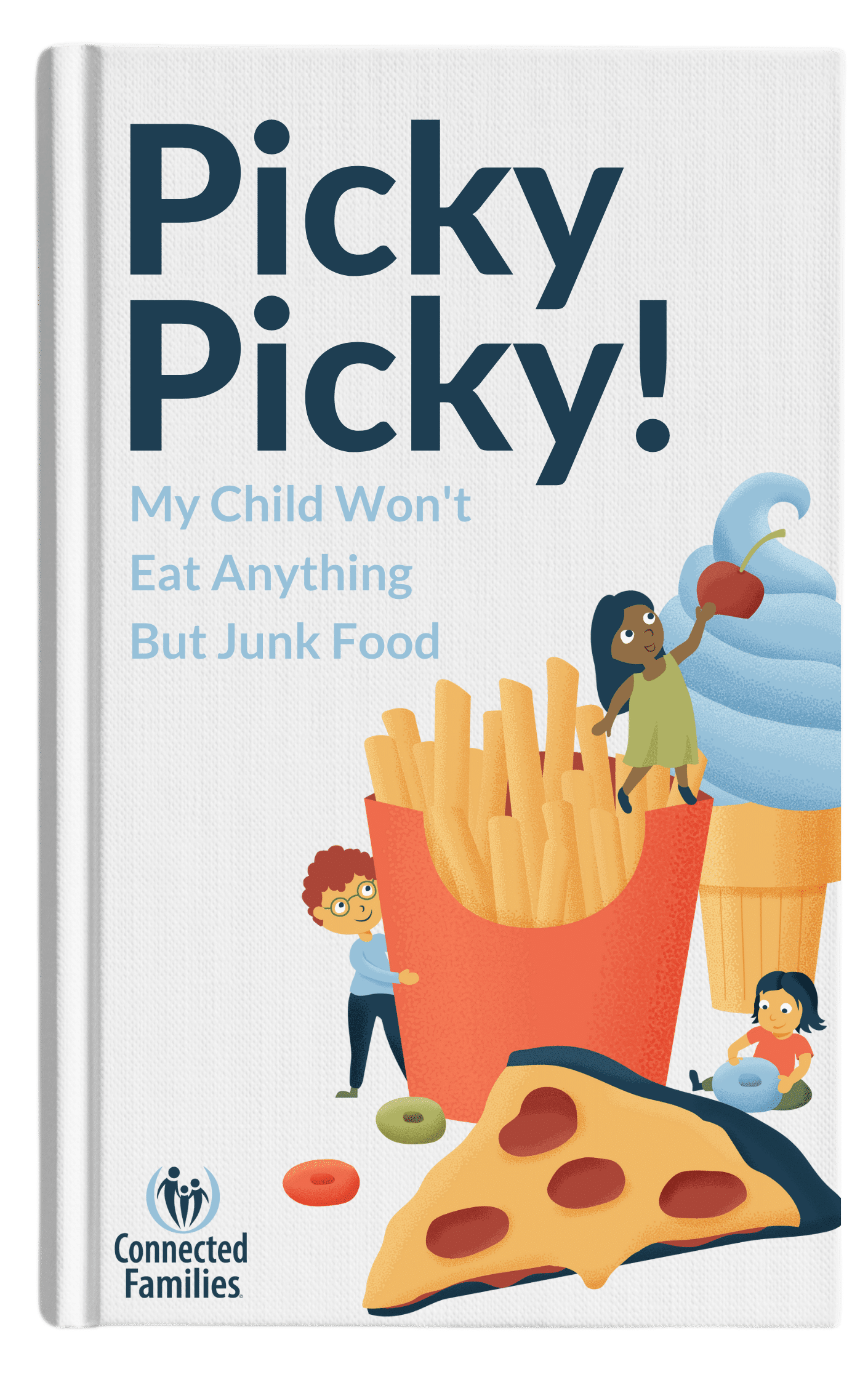
Got a very selective eater in the home? Maybe they only eat the color white, or just can’t sit at the table long enough to eat anything. Whatever the challenge, we want to help you.
Read our FREE ebook, Picky Picky! My Child Won’t Eat Anything But Junk Food.