
*We’re grateful for the collaboration with Connected Families Certified Parent Coach Pam Thompson in the creation of this content.*
It can feel overwhelming if your child is prone to whine or act out when they don’t have your constant attention. But instead of seeing your child acting out for attention as a burden, you can see it as an opportunity to lavish love and care on your child the way God loves you. Does this seem impossible in a busy home?
Don’t worry, I’ve discovered from coaching parents that small changes can make a big difference and bring relief to the whole family.
Last spring, I coached Vicktor and Natasha. They and their two young sons were temporarily living with Vicktor’s mother. The energy levels of the 1-year-old and 3-year-old boys made living in the small house very stressful, especially at dinner time. Vicktor and Natasha felt frustrated and embarrassed that 3-year-old Mikah often threw tantrums and refused to sit at the table. They had no idea how to get him to cooperate. Yes, he was “acting out for attention,” but the truth was that Mikah had a valid need to connect with his dad after a day spent apart.
During a coaching session, Vicktor made a pivotal decision–he decided to spend a few minutes playing with Mikah before dinner.
The result of proactively meeting his child’s need for attention before he had a chance to act out? There was a significant change in Mikah’s behavior – from resistance to cooperation. Mikah started joining the family at the table and was even able to answer questions about his day! This small change not only made dinner times easier but also strengthened their connection in profound ways.
Vicktor and Natasha learned a powerful, long-lasting lesson. Mealtimes are more enjoyable and they feel more confident in their parenting as they’ve learned the power of proactive connection.
Does your child act out for attention?
Attention is a God-given need. Our kids should seek it. The idea of “needing attention” might sound negative, but connection is a God-given need. In Genesis 2:18, God said that it was not good for us to be alone. We were created for relationship – with Him and with other people. “Getting our attention is exactly what a child should be doing”, say Jim and Lynne Jackson in How to Grow a Connected Family. A child who doesn’t seek (and receive!) attention from their parents will likely start to seek attention in other places.
Why it’s okay (even healthy!) to “reward” your needy child with grace-filled attention
When I was an early childhood teacher, I would sometimes hear teaching staff talk negatively about certain kids who were misbehaving. “They’re looking for attention. If we give it to them, it just rewards their misbehavior!” … as if needing attention was a bad thing.
It’s natural for all of us to seek attention when we don’t feel connected. For kids, this can mean acting out to get noticed. Why? Because negative attention is better than being ignored, and intense kids are often looking for a predictable way to get intense attention from their parents.
Parents (or teachers) will respond with intensity if a child does something annoying enough. This can become a pattern in which a child believes, “I get the most attention when I behave badly.” Giving a child intense positive attention can transform that belief.
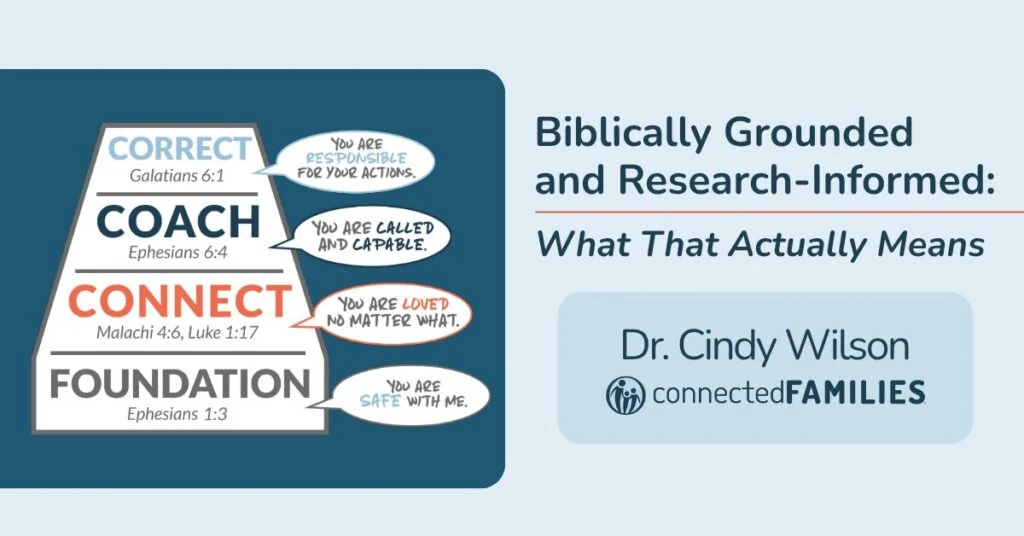
Connection helps kids feel “loved no matter what” by us and by God
Connecting effectively with your kids is about more than just decreasing whining and acting out:
- Connecting helps your child feel loved and valued in meaningful ways and meets your child’s God-given need for attention.
- Connecting well during ordinary moments communicates: “You don’t have to do anything special to earn my love.”
- Connecting during misbehavior models God’s unconditional love. Christ died for us when we were still sinners (Romans 5:8). Your kids’ difficult moments are a unique opportunity to offer that same kind of love. As it says in How to Grow a Connected Family, “The less children feel they deserve love, the greater the impact of lavishing it on them anyway.”
Giving meaningful attention changes your child’s brain
Science backs up the importance of meaningful attention and connection. According to the late Dr. Karyn Purvis, co-founder of the Karyn Purvis Institute of Child Development at Texas Christian University, “When you connect to the heart of a child, everything is possible.” But how does purposeful attention impact your child?
- Eye contact and touch are important for connecting with your kids. They increase the “feel-good hormones”- dopamine, serotonin, oxytocin, and endorphins. Research shows that these hormones make us feel happy, satisfied, and motivated. They also help control our mood and reduce stress and anxiety. In addition, giving kids focused attention can improve their attention span and make them more cooperative.
- Connection wires brains for impulse control and willingness. Dr. Becky Bailey, an expert in childhood education and developmental psychology, states, “Connecting with people in meaningful ways literally builds neural connections within the brain.” (Parent Education Curriculum) When your kids feel safe and connected with you, they have more motivation to learn and to try new skills. Connection also soothes the lower centers of the brain, which helps children plan ahead, make wise decisions, practice self-control, stay focused, and manage their emotions. Young children still need your help with these skills and connecting with them supports this development. (Tweens and teens need this too!)
Does this feel overwhelming? You might be thinking…
“I don’t have time.”
“How can I give my needy child more attention while cooking, helping my eldest with homework, and nursing a baby?”
First of all, you don’t necessarily give more attention. When you understand the kinds of connection children crave, you can weave purposeful, “bucket-filling” attention into your day in small doses:
- Healthy touch and joyful eye contact communicate safety and delight.
- Silliness and play connect to the heart of a child and disarm fear.
- Undivided attention (even for a minute or two) communicates, “You are important enough to be my whole focus.”
Although it may seem overwhelming, like Viktor and Natasha, parents I’ve coached have found that spending purposeful connection time with their kids actually makes parenting easier!
“I didn’t get this kind of unconditional love and attention as a child.”
One mom taking the Grace and Truth for Moms online course shared this: “I didn’t get this kind of unconditional love and attention as a child. It’s not about Jesus coming through me perfectly to my children; it’s about Him coming perfectly to me. I missed that as a child—He’s there for me, too.” If you struggle to connect well with your child because you didn’t receive love and attention yourself as a child, this article may help you understand what you can do.
“I don’t know where to start.”
A simple plan can help. Try setting aside a few minutes each day to be fully present as Vicktor did. Start by choosing a key time of the day when your child struggles the most. In what way can you delight in your child and meet their need for connection before the stressful time in which they usually act out?
Simple ways to give purposeful attention in a busy day
There are many fun and effective ways to strengthen connection with your kids. Try choosing a few ideas that can easily fit into your life and bring joy to both you and your child.
Routine times:
- Create routine greetings to help your child start and end their day feeling cherished, e.g., with a simple song or just a regular morning phrase like “Oh boy, it’s my boy!” After being apart, you can greet your child with “You’ve been gone, and you’ve been missed. Here’s Mama (or Papa) with a hello kiss!”
- Create a unique handshake, code word, gesture, or special sound for each of your kids that means “I love you!”
- When possible, include your child in your chores, using playfulness, touch, eye contact, and focused attention. For example, fly young children to the table to “airdrop” the dinner napkins; older kids can design a menu or add ingredients to the dinner you’re making. Laundry can be a fun time to practice sorting, especially if kids can throw items into a basket.
- Make up or learn a song to sing together while waking up, getting dressed, or picking up toys. Whispering during these routine activities can make it seem like you’re sharing a cool secret.
- Use diapering and dressing times as an opportunity for playfulness. You can give a gentle squeeze as you progress through the routine, e.g. “Hello, sweet toes. Hello, strong legs. Hello, round tummy.”
- When your child has an owie, look over their body for other “wounds.” You can respond with, “There’s another one!” and put on extra lotion, kisses, or bandaids.
- Use car time to connect with your kids. Sing favorite songs with them that have special meaning for you and your child.
Simple Songs and Ideas PDF
Need more ideas for fun songs or activities to do with your child? Check out this FREE downloadable PDF with ideas you can start using today!
Fun times:
- Practice “behavior matching” with your child. This simply means doing what they do. Kids copy parents all the time, and it’s an important aspect of bonding. When you copy them, it shows you are alike, they belong, and you think they have good ideas! (Make sure your child feels enjoyed, not mocked.) For example: Wear the same color that they choose. Sit the way they sit. Choose the same flavor of ice cream they choose. Build a tower like the one they just built, or make your car go “vroom” in the same way their car does.
- Play peek-a-boo. Play it the traditional way, or hide a toy and find it together, or hide your child under a blanket and find them. The joy-filled eye contact when you see your child builds security in your relationship.
- Chase games and hide-and-seek are advanced versions of peek-a-boo. You can search for your child and remind them that you will look for them and that you love them. (“I’m going to get you… I got you! You ran off, and I found you! I love you!”) (You can even tell your child the Parable of the Wandering Sheep, where the Good Shepherd leaves the 99 to pursue the one.)
- Sit close or with your child on your lap and read books or tell stories together. Act them out as you read (Pete’s a Pizza is a great example.) Look at photo albums and tell your child about what they were like as a baby. Tell your child stories about your childhood. Or tell them stories about a challenge that they overcame. Perhaps they will want to tell you a story as well.
- Sing simple songs or fingerplays with your child. When possible, put them on your lap facing you. This incorporates eye contact, touch, and playful engagement! When you don’t know a song, make one up. The words and melody aren’t as important as the interaction. (See this free PDF for simple songs and fingerplays to use with a young child.)
- Power reversal play, where the child takes on the role of the strong one helping you, brings laughter and helps kids feel confident and empowered. This can be as simple as: Let your child “rescue” you from an imaginary trap. Pretend you are too weak to open a jar or door and ask your child to “save the day” by opening it. Pretend you are the bungling, confused adult who needs your wise, savvy child, or they are the teacher, and you’re the student.
Small Steps, Big Impact: A Parent’s Experience
Last fall, I guided a small group through Connected Families’ Sensitive and Intense Kids online course, and I asked the parents what they found encouraging. Julia, one of the moms in the group, shared this experience with me.
“Today, I took my 6-year-old daughter to her music class. Normally she is chaotic and disregards the teacher’s instructions. I’ve felt frustrated and embarrassed by her behavior. But today was different. My daughter was calm, engaged with her teacher, and followed instructions well! As I reflected on the difference, I realized it was me. I’ve been different. I’ve been investing time in connecting with her, fostering her sense of security and love rather than trying to control her. Recognizing that her performance was “not my report card” was a huge takeaway from this course. I’ve become better regulated and equipped with the tools to parent more effectively. God created my daughter and loves her, and I am able to delight in her again and see her for the wonder and gift that she is.”
Understanding her own identity as a beloved child of God enabled Julia to appreciate, enjoy, and connect with her daughter.
Small changes can make a big difference. Embrace your child’s need for attention as an opportunity to show love and care. By making these intentional efforts, you will strengthen the bond with your child and help them feel cherished and valued…both by you and by God!
“How precious are your thoughts about me, O God. They cannot be numbered! I can’t even count them; they outnumber the grains of sand! And when I wake up, you are still with me!”
Psalm 139:17-18
To connect with Pam for parent coaching, please reach out to her directly.
© 2024 Connected Families