
🎧 Prefer to listen? This post is also part of an audioblog!
When your child is failing school, the most effective response isn’t more pressure. It’s shifting responsibility back to your child while communicating four messages: you are safe, loved, capable, and responsible. This reduces the anxiety-nagging cycle and helps kids own their grades.
It seems there’s a problem: grades don’t matter to your child. They just don’t care! Or at least it appears that way. You know grades aren’t the most important thing in life, but… they are important. You want your child to understand the connection between working hard and thriving later in life.
So you’re worried. Maybe upset. And you might find yourself pushing your child toward improvement.
Somewhere in this struggle, a familiar pattern often emerges. Parents feel frustrated and push harder. Kids resist. The tension grows as parents feel more responsible and kids feel less responsible. Everyone feels discouraged.
This spiral makes compassion and grace hard to come by. The fruit of God’s Spirit becomes tough to access. You want to nurture kindness, diligence and perseverance in your child, but in these moments, you may be unintentionally modeling defensiveness and performance-based worth instead.
Here’s some research worth sitting with before we get to solutions:
“…poorer outcomes were seen among children who perceived either mothers or fathers valuing their achievements more highly than they valued being kind to others. These youth experienced more… depression and anxiety, … acting out behaviors and lower self-esteem… these students also had lower GPAs, and were reported by teachers to have more learning problems and disruptive behavior at school.”
You have good intentions for your child. So let’s look at how those good intentions sometimes get derailed, and how to more effectively guide your child toward taking responsibility for their own grades.
As a parent coach, I’ve walked with many parents as they’ve found ways to gracefully encourage their kids’ responsibility without straining the relationship. Here’s the heart of what I’ve learned.
Why does nagging make grades worse? The anxiety-nagging cycle
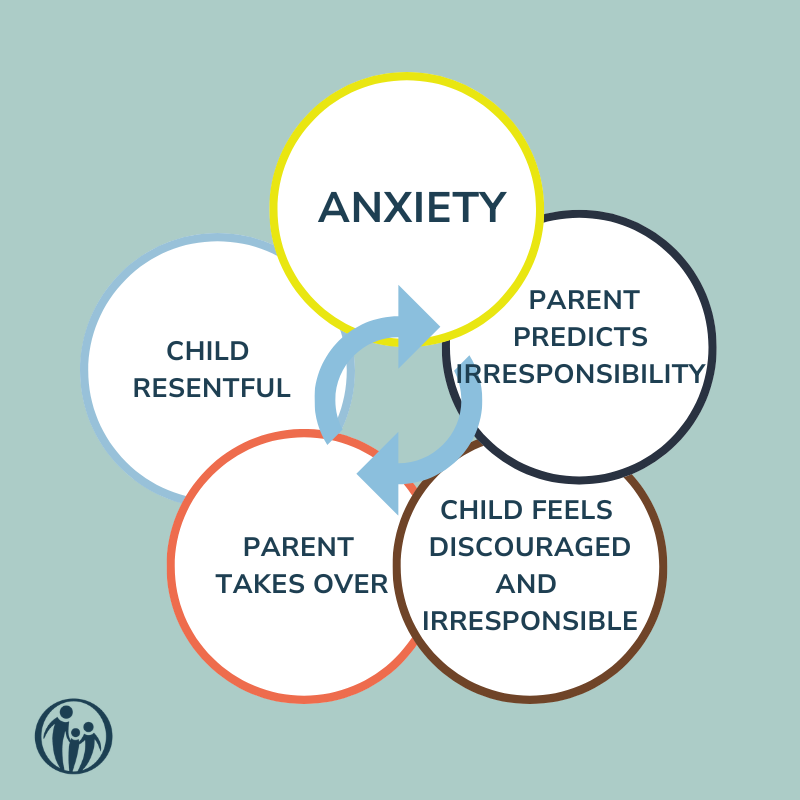
It helps to understand the cycle that often unfolds. It almost always begins with anxiety:
- Anxiety about your child’s future causes you to worry that avoiding hard work will be a lifelong pattern and they will always struggle. Your child may absorb the message, “I am irresponsible.”
- This belief discourages your child, who then becomes less responsible, slowly living into that negative projection.
- Your child’s growing discouragement tempts you to start doing things for them that they could do themselves.
- As you manage your child’s responsibilities, resentment grows on both sides.
- You feel more discouraged and anxious, and the cycle starts over, with the relationship increasingly defined by tension.
When we regularly do things for our kids that they can do for themselves, it sends a message: “You are incapable of doing this on your own.“
Encouraging Without Nagging: The Four Messages
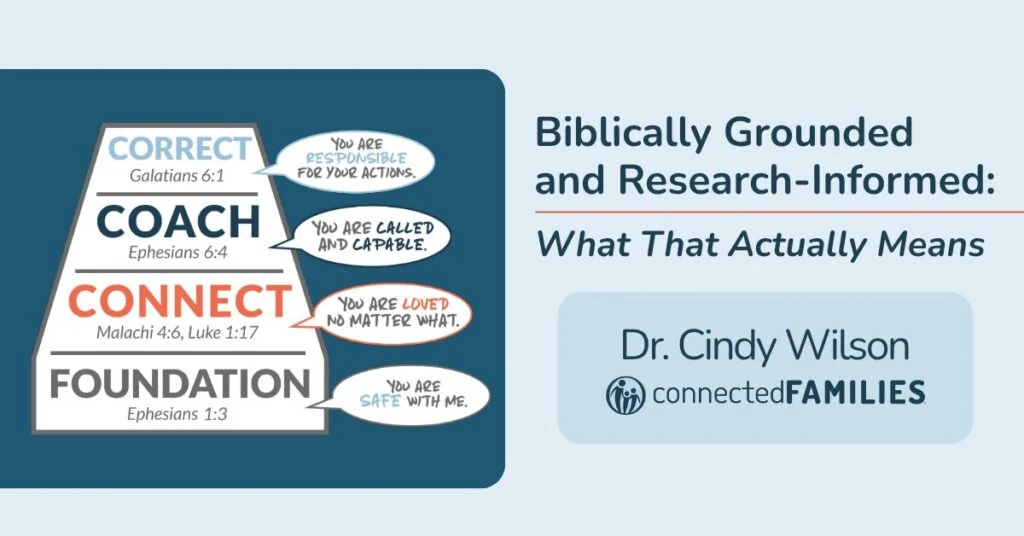
Rather than nagging your child to perform, you can focus on communicating the four powerful “You are…” messages of the Connected Families Framework™. These messages breathe life back into your relationship and, over time, into your child’s sense of responsibility.
1) You are SAFE with me, even if you struggle in this subject
Thoughts like, “If my child is failing now, what will it look like when they’re older?” tend to fuel more anxiety, more pushing, and the cycle rolls on. But when we learn to think differently, anchored in God’s wisdom, we can begin a new, more hope-filled cycle. Try these reframes:
- “If my child fails this class, they have an opportunity to grow and do better next time.”
- “I know my child has worked hard before at things that are important to them.”
- “God has significant plans for my child, regardless of their report card.”
- “My child is not MY report card. Their grades are theirs, not mine.”
- “This is an opportunity for my child to truly internalize my unconditional love.”
In Matthew 12:34, Jesus says, “the mouth speaks what the heart is full of.” What you believe in your heart toward your child will come out of your mouth. So listen to what you say, to others and to yourself, about your child’s struggles. Anchor yourself in God’s truth, and begin to speak the truth in love out loud.
2) You are LOVED no matter what grade you get
It’s not always natural to feel and express love when a relationship has held a lot of conflict. But finding and expressing love to your struggling child sets a tone that reflects Christ’s love. Start with affectionate words, playfulness, or empathy: “You know what, math was often hard for me too. I get how frustrating it can be!“
As your lighthearted affection begins to land, your child’s defenses may soften. You might leave an encouraging note before a big test, then do something special together afterward, regardless of the outcome.
Remind your child they are fearfully and wonderfully made in God’s image. When your child understands that their identity comes from the value God places on them, they can truly internalize that they are accepted and loved no matter what.
Encouraging Kids Who “Just Don’t Care!”
Want to hear more on this topic? Check out our podcast, “Encouraging Kids Who, ‘Just Don’t Care!’. It’s a good one!
3) You are CALLED and CAPABLE of doing your schoolwork
Of all the things your child feels, capable is often the least. A misbehaving or struggling child is almost always a discouraged child.
Look for small positive steps, maybe ones you’ve overlooked: “I noticed you passed three classes last year. In trying to push you toward math, I didn’t celebrate the success you had in those other classes. I want to do a better job of noticing all the things you do well.”
Naming even the smallest effort is an encouragement. (Believe me, the effort is there if you’re willing to see it.) Philippians 4:8 teaches us to focus on “whatever is true, whatever is noble, whatever is right… think about these things.”
Start the semester with a few capability-building questions. Be prepared for, but don’t react to, indifferent or negative responses:
- How would you like school to go this year? (“I don’t know!!”)
- What kinds of grades are you hoping for this year? (I’ve heard a child say “D+”)
- What help do you want or need from me? (A likely response from a discouraged child is “None! I’ll be fine. Leave me alone.”)
If you’ve been overly involved, it’s okay to reset:
“I think I’ve been too involved in your schoolwork, and it’s created distance between us. Would you agree? I don’t want that kind of relationship anymore, and I’m sorry. I want you to be responsible for your grades, because they’re yours, not mine. I believe you can do it, and I want to support you however I can. How about we check the parent portal together once a week, maybe Fridays? I won’t lecture or criticize; we’ll just both know where things stand.“
But the heart of “You are called and capable” isn’t really about schoolwork. The weight you place on grades will lighten as you consider other values worth nurturing: faith, kindness, integrity, perseverance, creativity, resourcefulness.
In fact, research found that “the best outcomes were among children who perceived their mothers and fathers as each valuing kindness toward others as much as, or more than, achievements.”
Even changing the nature of your dinner-table conversations speaks volumes. Instead of “How did your math test go?” try “How were you a blessing to someone today?” or “What did you feel good about today?” or “How did you work hard today?“
Teach your children God’s truth about what real “success” means.
“Let not steadfast love and faithfulness forsake you; bind them around your neck; write them on the tablet of your heart. So you will find favor and good success in the sight of God and man.”
Proverbs 3:3-4
4) You are RESPONSIBLE for your classes and schoolwork
Most parents want to begin here, but it’s not the place to start. When your child’s academic performance is underwhelming, keep the three previous messages in mind as you nurture responsibility.
When checking in on Friday, if your child gets way behind, a natural impact would be a failing grade or your child needing to negotiate with a teacher about how to catch up. (Negotiation is a good skill to develop!)
If some basic and clear expectations aren’t met and a more immediate impact is needed, you can decide to put consequences in place, but with grace and kindness. This will make them more effective because your child will know this is about their best interests, not your need for control. For instance, you might agree together to set aside a weekend privilege that tends to distract from studies.
Your child is learning to be responsible for their grades, choices, time management, and ultimately their life. They are growing, and they are a work in progress. God expects us to make mistakes, knowing they can become wonderful learning opportunities. Sometimes our children’s stumbles teach them more than their successes!
Galatians 6:7 says, “a man reaps what he sows.” As we give our kids more freedom to experience the sowing-and-reaping principle for themselves, we can relax into being their mentor instead of their manager.
When grades no longer weigh so heavily on you, and the responsibility shifts from you to your child, you’re free to empathize with and encourage your struggling child. This builds a connective rather than adversarial relationship. It can be a big, even scary step. But your family is worth it.
This whole approach starts with one key question: whose problem is it? If you’re wrestling with that, read “Whose Problem Is It?” for the principle behind this practical guide.
If you’re struggling with a child’s lack of motivation and feel unsure how to free your family from anxiety and tension, consider walking through it with one of our parent coaches.
© 2022, 2026 Connected Families