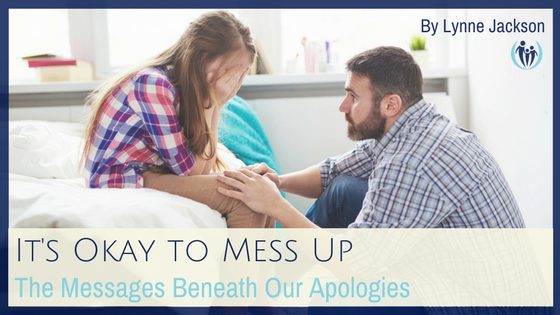
Catie came for coaching to address sibling conflict and disrespect. During one session she confessed, “I get so mad when one son hits the other, and I just blew it yesterday. I got so angry, and yelled, and it all spiraled downward after that. I apologized, but I felt horrible about myself.” She looked defeated as she described the interaction, so we dug deeper into what was underneath it all.
The Messages Beneath our Apologies:
I asked her, “What messages do your boys get when you apologize, but they see you looking ashamed and discouraged afterward?” She thought for a moment and we came up with some ideas together:
- Apologizing is hard to do and can make us feel even worse afterward.
- Asking for forgiveness doesn’t really solve anything. It’s just something we’re supposed to do.
- It’s a really big deal in this family to mess up!
Catie realized if her kids were believing these things, they wouldn’t learn to reconcile well.
A big reason why it’s so difficult to apologize:
Who wants to feel even crummier after you’re done?
Reframing what it means to apologize:
So then we discussed: What messages would you want your boys to get about apologizing?
- Apologizing is GOOD! It makes God’s grace and mercy real.
- Forgiveness in human relationship helps people feel better and closer.
- In this family it’s safe to mess up. There are always second chances – we’re growing and learning together.
Catie reported in a follow up email that she was taking small steps in bringing grace to their conflicts:
I am doing somewhat better with having a little more patience. If I do blow up, I apologize by saying, “Please forgive me” and I try to make it positive. Then at night when we pray, I remind my kids how great it is that God has forgiven me even though I messed up.
Catie is now showing her kids AND guiding them to value and receive God’s grace, to apologize sincerely, and to grow closer through conflict. You can too!