



Practical Tips To Turn Uncontrolled Emotional Outbursts Into Big Wins
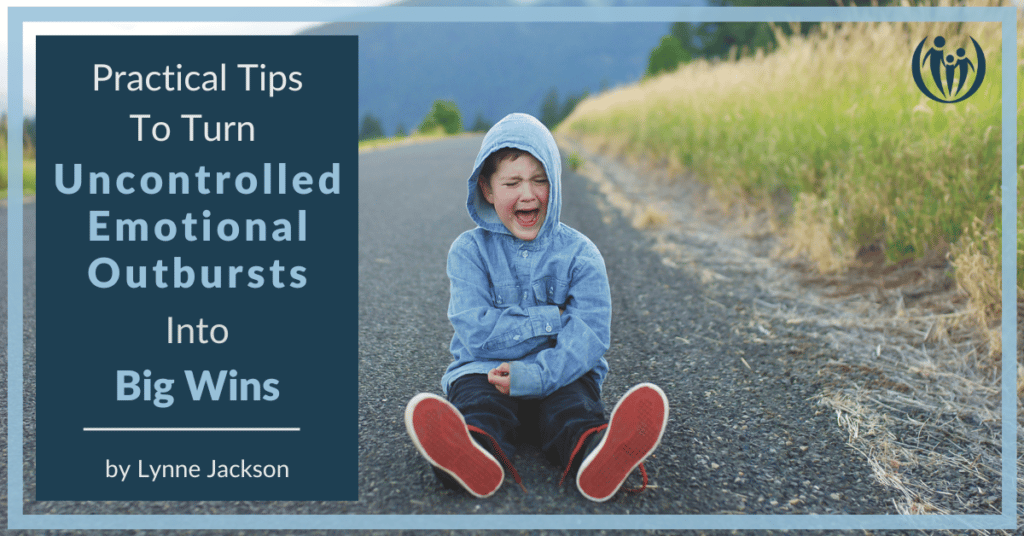
Your child is struggling. Again. They are frustrated and unload their stress on everyone around them in an uncontrolled emotional outburst. It might be a classic toddler tantrum or an older child stuck in explosive patterns. How can you turn these tough times into a big “win”? A win where resilience is learned and your child feels empowered and capable?
I’ve heard many encouraging stories from parents during coaching sessions, but even I was shocked at this one.
Coaching clients Krista and Ted struggled with their anxious, intense 10-year-old daughter, Carlie, and her big, uncontrolled emotional outbursts. On a family ski trip, against their better judgment, they gave in and let their tired daughter go back up the ski hill, “Just one more time!” at the end of the day.
It didn’t go well.
A meltdown at the top of the ski slope
“We should have known better. The low point of our whole vacation was Carlie’s huge outburst on that last icy slope.”
Can you imagine a worse place for one of Carlie’s big outbursts than at the top of a ski slope right under the chair lift – providing a little entertainment for the skiers floating overhead?
Her parents continued, “She kept screaming over and over, ‘I can’t get down!’ Everyone was staring at us!”
Krista tried to calm Carlie’s meltdown (with a fair degree of embarrassment), while Ted followed their younger, more confident daughter down the hill. After that experience, for the rest of the ski trip, Carlie insisted on skiing only really easy hills. This drained the fun out of skiing for her parents.
“So, how did Carlie get down that day?” I asked as they relived the discouraging memory.
“She eventually figured out how to get her skis off and make her way down to safety.”
“So she didn’t need the ski patrol to give her a ride? Huh.” I said (with a little smile), “Even though she was terrified of what the whole family agreed was a really difficult, icy, steep slope, she eventually calmed down and figured out how to solve her problem. Doesn’t sound so dismal to me.”
A curious look came over both Krista and Ted. “Never would have thought to look at it that way.”
The three tips I gave Carlie’s parents about shifting their perspective are relevant to all parents facing a big outburst.
Shift your perspective
1. Take the focus off the uncontrolled emotional outburst
I explained how they could shift their focus away from the long public outburst. Instead, they could choose to ruminate on the final part of the process in which Carlie recovered and regrouped. This shift would help to combat and erase the under-the-surface messages of, “Here we go again. You’re a problem. You’ve got no emotional control, and you’re embarrassing me!”
Putting the focus on what kids do well with specific concrete details effectively strengthens helpful brain pathways. This will make it easier for you and your child to envision the positives happening in the future. It’s just like athletes who visualize their routine or technique. The more you envision the positive, the easier it is to act on those positives. It’s an example of the principle, “Whatever you focus on, you’ll get more of.” It also reflects the Bible’s command to “think on” whatever is praiseworthy. (Philippians 4:8)
If your child has overwhelming emotional outbursts, focus on whatever process they used to work through their big emotions, even if it took them a while to get there. Point out how they were able to successfully calm. This helps them learn how to arrive at problem-solving more confidently without hurting others.
2. View the outburst as an opportunity
Sometimes, parents live in fear of the next uncontrolled emotional outburst. They inadvertently manage kids’ lives or walk on eggshells to avoid anything that could set a child off. The message that gets communicated to their child is, “It’s bad and shameful to get really upset,” or “Your outbursts are too much for me.”
With their “aha” moment, Ted and Krista’s view of that day changed. They decided that maybe it hadn’t been such a mistake to let their daughter take the run she wanted to. They began to realize they could view their daughter’s inevitable emotional outbursts not as an embarrassing disaster but as an opportunity to strengthen connection and self-regulation skills.
When parents make this shift, a child receives the following messages:
- “Your emotions are yours to learn to regulate, not mine to manage.”
- “I believe you can do that, and I can be a calm presence while you’re learning.”
The truth is, all kids will have struggles. And as adults, they will continue to face their share of struggles. When you learn to focus on growth, as Carlie’s parents did, you build your child’s identity as an overcomer. The struggle isn’t a disaster, it’s an opportunity.
When you are able to focus on the end of an outburst, you bring attention to the fact that your child can learn to work through their emotions.
If your child has overwhelming emotional outbursts, focus on whatever process they used to work through their big emotions, even if it took them a while to get there.
How did Ted and Krista’s change in perspective affect Carlie?
Fast forward. In their final coaching session, Ted arrived with a big grin and described a conversation he had with Carlie. He had told her one night at bedtime, “Remember that tough day on the skill hill? You know what I realized, Carlie? You were really brave after you fell – you were scared, but you overcame it. You calmed down and figured out how to get down that steep, icy hill all by yourself!” She smiled as he shared his new, positive perspective on their skiing challenge.
He then told me about the impact that his shift from frustration to encouragement had on his daughter:
- Carlie’s emotional outbursts were becoming less severe. She seemed to embrace the notion that she could overcome tough stuff and was learning to calm down much faster.
- She overcame her fear of the slopes. In a big way…
After Ted and Carlie’s conversation, they went skiing again. Carlie was eager. “C’mon, Dad, let’s go do THE WALL!” Ted was pretty apprehensive because he knew that The Wall lived up to its name. It was a double black diamond slope — the toughest run in the whole ski area. They stood at the top, staring down at the sheer drop and “skier-eating” moguls. Even Ted was a little unnerved, but Carlie announced, “C’mon, Dad. Go. I’ll come right behind you. Go before I get too scared!” Ted didn’t want to miss this amazing opportunity, so he cautiously headed off. Carlie followed him, took her time, and conquered The Wall!
3. Embrace your child’s identity as an overcomer
So what changed from Carlie’s first ski slope experience to her second?
IDENTITY! In the first situation, she felt like the weak one, the problem in the family. She wanted to avoid the possibility of feeling ashamed again, so she avoided any challenge in which she might fail.
During their conversation, Ted didn’t tell Carlie what she could have done better. He thoughtfully affirmed what she had done well, and that gave her a new identity as an overcomer. She hadn’t failed the first time on the ski slope. She’d conquered fear, calmed herself, and found a way to get down the slope safely. Seeing that experience in those terms was enough to encourage more bravery.
Kids gain identity from parents in little bits and pieces all the time, in lots of different kinds of situations. Emotionally intense moments hold particularly great potential, either positive or negative, to form identity.
These are great new perspectives to embrace when your kids struggle. But what I know (from personal experience!) is that it can be really tough to respond well in the moment. Kids freak out over challenges, and you might get so frustrated you can’t see straight. (We’ve got a few ideas for the heat of the moment in this article.)
What I love about Ted’s story is that if you miss an opportunity to respond in your new perspective, you can have a do-over: just reframe a child’s “failure” or misbehavior later. When heads are cool, you can regroup and embrace an overcomer identity in your child by looking for “whatever is good” and affirming it. It can be a powerful way to strengthen your new perspective and communicate important messages:
- You are loved no matter what. Even in this difficult situation, I will look for the good in you.
- You are created by God for His good purposes. You are capable of growing the values and skills to walk in those purposes. This is how your child’s identity can begin to change from “I’m a problem” to “I’m a problem-solver.”
Grow your child’s emotional intelligence
Research tells us that high emotional intelligence helps individuals to communicate better, reduce their anxiety and stress, defuse conflicts, improve relationships, empathize with others, and effectively overcome life’s challenges… it enables us to live our lives with intention, purpose, and autonomy.
Here are four steps you can take to help your child build emotional intelligence:
- Empathize and help your child label their feelings instead of trying to control their emotions. This has a natural brain-calming effect and builds emotional intelligence (self-awareness). For example, “It’s so hard when somebody grabs your favorite toy! That would really upset me if I were you. How are you feeling right now?”
- Ask your child how they could solve the problem. (Wait until after the outburst has subsided, of course.) “This was tough. How do you think we could solve it so everyone feels good about it?”
- Talk about the natural benefits of their actions, for your child and for others. Make some observations about specific ways your child was able to calm down and solve their problem. “You came up with a good idea about how to share the toy. Then you were able to play together and have fun again!”
- Celebrate their accomplishment and express confidence that they are learning and growing in some awesome ways!
The gist of these four steps is to help your child learn to understand and express their feelings, figure out how to deal with them, and then feel good about that, which is no small accomplishment! As reframing afterward becomes more natural, you’ll probably find it easier to engage differently when your child is in the midst of big emotions.
This last step of helping kids celebrate their growing skills is perhaps the most important. You might say something like, “You’re learning something a lot of adults haven’t learned. Imagine how our world would be different if everyone was learning how to calm down when they’re upset, understand their feelings, and deal with them wisely. Wouldn’t that be wonderful?!”

Do you have a child with EXTRA needs?
Parenting isn’t easy, but when you’ve got an extra INTENSE or SENSITIVE child with big feelings… it’s even harder.
The Sensitive and Intense Kids online course will equip you to parent well, even with these unique kiddos.