


3 Signs of Unhelpful Consequences… and How to Fix Them!
¿Prefieres leer en español? ¡Haz clic aquí!
“You’re stupid!” says the frustrated child.
The parent feels annoyed, even a bit angry and responds, “You can’t talk to me that way! You’re grounded for the rest of the day! You go to your room and think about what you said!”
Parents often deal with situations like this hoping to teach their children a lesson—but sometimes this can lead in the wrong direction. This sort of consequence may lead to more anger and disrespect down the line.
Here are three characteristics of unhelpful consequences that parents often give to their misbehaving or struggling kids.
3 characteristics of unhelpful consequences:
1. Given while upset (even just a little)
When we fire off a quick consequence while upset, it tends to upset our kids, too. But it seems to “work” so we keep doing it. It can be subtle, but kids treated this way tend to stew in their frustration or anger. Then it comes out later as some other form of disrespect. We punish it again, with perhaps a bit more energy, and soon we’re in a troubling cycle where our apparent disrespect is eventually met with theirs. For a child, it’s hard to respect and obey a parent they perceive as disrespectful—just like it’s hard for a parent to respect and obey an out-of-control boss/spouse/friend.
2. Have nothing to do with the misbehavior
A back-talking child given a grounding and “go to your room and think about it” won’t see the correlation between his choice of words and the consequence, because there is none. And what the child is likely to think, if anything, is how angry they are with their parent. Parents often get into a rut of giving consequences that cause some form of pain, thinking that the pain will motivate kids to behave better in the future. Sadly, this can “work” for a limited time because pain does shape behavior, but it does nothing to reach the logical part of a child’s brain.

3. Over-the-top and out-of-proportion
When we give consequences that are way out of proportion to the misbehavior, kids often feel a profound sense of unfairness and powerlessness. They may also feel overwhelmed and, once again, react strongly toward the parent. Grounding a child for a month because she didn’t take out the garbage is a huge overreaction. Over-the-top consequences are viewed by kids as controlling and manipulative and do nothing to help grow kids toward wisdom. Rather, they teach kids that “might makes right” and that gaining power is the most important thing. When kids feel controlled by parents, they may submit to their parents but tend to look for someone they can control. That person is often a younger sibling!
Here’s what you can do instead:
1. Clear your head and calm down.
Whatever you need to do to calm down, figure it out and do it. Examples I’ve used or heard other parents use include: take a step backward, count to ten, or rub lotion on your hands before saying anything to your child, smile at your child, take a deep breath, or pray for God’s peace in the situation. The likely result of you calming yourself is that you can then focus on the misbehavior in a respectful and helpful way. The focus won’t be your anger, but the issue at hand. Your child will have more respect for you and you will have more respect for yourself as well!
Kids are more likely to learn from their mistakes when they face a consequence that helps them learn and grow. That kind of consequence doesn’t happen when parents are angry and irritated.
2. Think through a consequence to fit the offense.
As parents, we know the typical “crimes” our kids commit, but we often seem surprised when they happen. Instead of giving consequences reactively, plan ahead! Have a family meeting to identify the kinds of misbehaviors that often occur within the family (including parents), and begin brainstorming helpful, appropriate consequences that foster healthy learning and reconciliation. Some ideas for consequences include: saying four kind-and-true things for hurtful words spoken to another, repairing a broken relationship by spending time together or giving a heartfelt gift, making up for the time mom spent doing a chore for you by doing several of mom’s chores. (Check out the appendix in our book, Discipline That Connects With Your Child’s Heart, for more ideas!)
3. Give reasonable consequences that build wisdom.
If your child didn’t take out the garbage when she was supposed to, perhaps she could be given another chore to help her remember to take care of her responsibilities. If a child comes in the door and leaves a backpack, jacket, and last month’s science project in the entryway, perhaps he could put the backpack and jacket back on and haul the project back out the door, so he can do it over and put things where they belong. These consequences are reasonable and help keep the focus on making a wiser decision next time, rather than on a power struggle with mom or dad.

Consequences are an important teaching component for our kids. When parents learn to wield consequences well, kids tend to grow in wisdom about how their words and actions (or inaction!) impact others. They teach kids that they are responsible for their actions and their lives.
Apply It Now:
- What are the ways that your consequences have frustrated your child and prevented him from learning important lessons?
- What is one common struggle your child has where consequences are needed to help her grow?
- How can you be more thoughtful about helping your child grow in this area? What might an appropriate consequence be to help him learn?
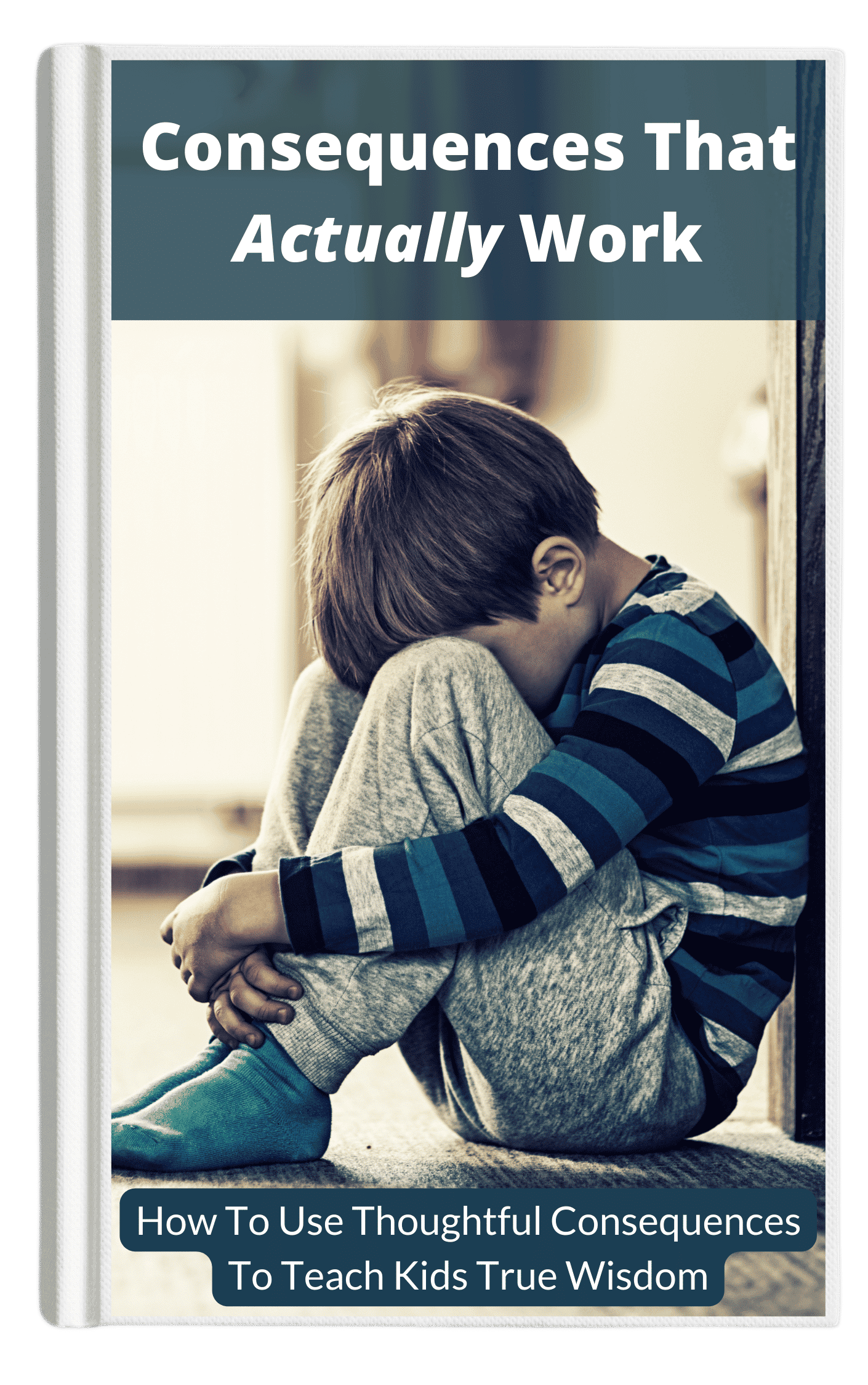
Take 15 minutes to learn how to give consequences that teach, rather than simply punish, by downloading our free ebook Consequences That Actually Work.
© 2015, 2025 Connected Families
Because your kids aren’t perfect. Neither are you. That’s why you need a plan for discipling your kids in the hard moments.